Showing posts with label heirloom vegetables. Show all posts

Tuesday, April 1, 2014

A Swedish Pea in a California Garden- How Heirloom Edibles Survive for the Next Generation

This year's seed trial: 'Sweet Fall' squash and 'Swenson's Swedish' snow pea

In California we are in the midst of a record breaking drought that has put a sizable dent in what I'll grow in my edible garden this spring and summer. I'll focus on keeping my existing garden alive and forgo planting edibles in every available corner, but I decided to go ahead with my yearly seed trials for Seed Savers Exchange Member Grower Evaluation Network (M-GEN), and Rancho Gordo's Bean Buddies Group.

The Mystery and Romance of Seeds
The last two years I tested lettuces through M-GEN that had been grown by families for generations until there was no one left to carry the seeds forward, and a unique variety risked being lost. That's a familiar story. This year when I opened my package from Seed Savers Exchange, I discovered 'Swenson Swedish' snow pea, and 'Sweet Fall' winter squash for my trials.

Grandma Hadley's lettuce was part of the M-GEN trials in 2013
I love the mystery of getting a package in the mail with a special and precious cargo every spring, and I admit I revel in the romance of their stories. Stories carry our collective histories and our favorite foods speak volumes about who we are and where we came from. 

'Swenson Swedish' was brought to the Minnesota by a Swedish immigrant around 1876, then handed down through the family who developed favorite recipes, among them is a creamed Scandinavian dish that I'm anxious to try. (Seed Savers has requested the recipe.)

Preserving Our Stories Through Seeds
Non-profit Seed Savers Exchange has a seed historian, Sara Straate, whose mission is to verify and uncover the stories behind their seed accessions:
In 1987 long time seed saver and SSE member, Will Bonsall, received the seeds "out of the blue" in the mail after the elder Swenson (Alvin) entered a nursing home. Alvin's son Charles Swenson had sent them from Iowa after reading about Bonsall, who began offering it in the Seed Savers Exchange member's yearbook. Charles still grows them, but he thinks he may be the only family member left doing so. 
Through the M-GEN team the peas will be spread throughout the continent and beyond, and no doubt become a favorite of families once more. 

For a map of M-GEN participants click here.

If you are interested in joining the the M-GEN team, contact: mgen@seedsavers.org 

Photos: Patricia Larenas, Urban Artichoke


Friday, June 21, 2013

Grandma Hadley's Heirloom Lettuce Lives On


Surely Grandma Hadley would be surprised to learn that I'm enjoying her beautiful lettuce in my garden in the San Francisco Bay Area. She was growing it in southern Illinois in 1915, according to her granddaughter, who passed the seeds on to her niece.

 Grandma Hadley's lettuce at a young stage

It came into my hands because this forward-thinking niece donated seeds to Seed Savers Exchange in 1988 for safe keeping.  Now, over two decades later it is being tested in a handful of gardens across the country through Seed Saver's Exchange Member-Grower Evaluation Network (M-GEN) in an effort to collect details on its cultivation and just as important, its flavor and texture. Ultimately, Grandma Hadley's lettuce will be preserved by being offered in their seed catalog. Those who grow, eat it and share it, will ensure that it will not be lost. 

To me this means more choice when I want to grow my own lettuce, which is a staple at my house!

From left to right: Grandma Hadley's, Merveille de Quatre Saisons,  Renee's Container Babies

It's thrilling to grow something in my garden that very few people have ever seen or tasted, let alone cultivated in their gardens.  It feels precious, and a privilege to be entrusted with the promise of plenty that rare seeds bring.

And this succulent, tender butter-head lettuce is worth saving- it has striking blue-green leaves edged with a delicate burgundy and it makes a lovely salad. 

Blue-green Grandma Hadley's lettuce with garden flowers 

Lettuce seeds are easy to save and I'm letting several of the plants go to seed. I'm looking forward to  sharing them with family, friends and neighbors.  I'm happy that this deserving heirloom will live on to feed and delight many more gardeners for some time to come.

Look for it from Seed Savers Exchange, perhaps as soon as next year.


Photos: Patricia Larenas, Urban Artichoke

Monday, April 22, 2013

Gardeners, Are You Ready For a Seed Trial?

My 2013 trial beans from Rancho Gordo

Have you considered participating in a seed trial?  It's a meaningful way to take your gardening to another level. Don't be afraid to give it a try. All you need are basic gardening skills and experience growing from seed to maturity (especially with annuals: vegetables, herbs or flowers).

The Purpose of Seed Trials
The reasons for conducting seed trials are to gather details about the performance of a particular plant in different parts of the country, therefore in diverse climate zones, growing conditions and different growers. This "crowdsourcing" approach has been very effective for organizations such as non-profit Seed Savers Exchange in Decorah, Iowa, and specialty grower, Rancho Gordo in Napa, California.

The information gathered from teams of gardeners and farmers enables the organization to offer rare varieties to the public with instructions and details about planting, growth habit and eating quality. Harnessing the efforts of growers is an invaluable resource for keeping the thousands of historical and heirloom edibles in circulation and in preventing their extinction.

My saved Madeira beans from the Rancho Gordo 2012 trial

Collecting Data From Your Trial
So besides the fun of trying out new varieties of edibles, you can feel good about contributing to their preservation. Among the data the participants are typically asked to record are: number of days to germination, rate of germination, days to flowering, days to maturity, size at maturity, and eating quality. Photographs may also be requested.

And if your crop fails, that's important information too- insect pests, animals, unexpected weather, and diseases,  these are the realities of gardening.

Madeira beans are a type of cranberry bean with striking colored pods


In my experience, participants are volunteers and are not paid, but the seeds are supplied free of charge. As a gardening geek, I love getting the trial seeds in the mail- they are in plain packages with no pictures and no instructions. It's exciting to grow them out and discover each new variety.

Seed Saver's Heirlooms
Some of these, particularly from Seed Savers, are very precious and there is only a limited amont of seed available. The majority of the seeds they save from extinction are sent to them by ordinary folks who have grown the seed within their families or with neighbors for generations. Saving the seeds from the trial is usually not required, but I always save some to grow again and share, and in the end, that's the goal with heirlooms.

Rancho Gordo- Saving the World's Beans One at a Time
Steve Sando, owner of Rancho Gordo, became a collector, grower, and supplier of a diverse array of beans, many of them rare, that he brought to the United States from his travels abroad. In some cases he has contracted with small heirloom bean growers in Mexico (see Rancho Gordo-Xoxoc Project) as a way to give them a market, which makes it possible for them to keep their farms and livelihood. And what beautiful beans they are!

Beans hold a special place in my heart. I grew up eating lots of beans, lentils, and garbanzos in my Chilean family, and I love them all. And because I don't eat meat (except seafood), I was thrilled to discover I could grow protein rich food in my own garden.

2013 Seed Trials
This year I'll be trialing two beans from the Putla region of Mexico for Rancho Gordo, and an heirloom lettuce called "Grandma Hadley's" for Seed Saver's M-GEN project.  If you are interested in learning more about the M-GEN project or participating, contact them at: m-gen@seedsavers.org.

Three Heart lettuce from my 2012 Seed Savers trial

Read my post about the Rancho Gordo bean trial.

If you would like some over-the-top inspiration about getting involved in saving seeds, watch this short presentation by Simran Sethi, in a TED talk she gave on April 2, 2013. Beautiful.

Photos: Patricia Larenas, Urban Artichoke

Wednesday, December 26, 2012

Celebrate the Season with Stuffed Heirloom Squash


Winter squashes are something I look forward to each year, especially after I began growing my favorite variety - the gorgeous Stella Blue Hokkaido (pictured above, center). It has a curiously blue- green skin and delicious, dense, rich orange flesh. 

I made quite a gorgeous and festive dish for the holidays by stuffing the squash with a tasty rice preparation that works very well when made ahead of time, then assembled and heated for your dinner.


Tips for Success with Stuffed Squash
The trick is to roast the squash as prepared above in the photo, before you stuff it. Carefully cut the top off to form a bowl, and score the inside. Rub lightly with olive oil or butter to keep it moist.

I baked mine at 400 F for about 30 minutes. The squash meat should be just tender - not mushy. Take care to check it while roasting so that it doesn't get too soft and collapse. 

While the squash is in the oven, a simple and versatile stuffing can be made with cooked rice (I used brown rice mixed with wild rice) flavored with sauteed onions, celery, herbs, (thyme, rosemary) and mushrooms. Saute the onions and additions separately then mix with the rice in a bowl. Adding chopped nuts such as pecans or walnuts and a handful of raisins creates a tasty dish appropriate for holidays celebrations.

Spoon the mixture into your partially baked squash, then return to the oven at about 350 F for 30 minutes to heat it thoroughly before serving.


Growing Winter Squashes
A beautiful harvest of Stella Blue Hokkaido, pictured below. Squashes are easy to start from seed, and by growing your own you'll have the best choice of heirloom varieties. 

Although direct planting into a prepared mound is often recommended (with good compost or organic fertilizer), I've had success starting my seeds in containers and transplanting the seedlings after they have developed leaves and are about four inches high.

Plant in spring as soon as the temperatures at night are in the 50's F and the soil has warmed, so that you get as much warm weather growing time as possible. They like regular water and grow quickly with a sprawling habit, so give them room on the ground or let them climb up a trellis. If you let them climb, you'll have to provide support when the squashes develop so they don't fall off!

Check Seed Saver's Exchange and Seeds of Change for seeds.


The beautiful Stella Blue Hokkaido squash is my favorite

Photos: Patricia Larenas, Urban Artichoke

Monday, September 3, 2012

Farewell to Summer: My Garden Photo Album


 Images From My Summer Garden
I love sharing my passion for gardening and hope you've found bits of encouragement, inspiration, or simply enjoyed a beautiful image in my posts now and again. 

Here are some images from my edible garden this summer that I haven't published previously that I hope you enjoy:

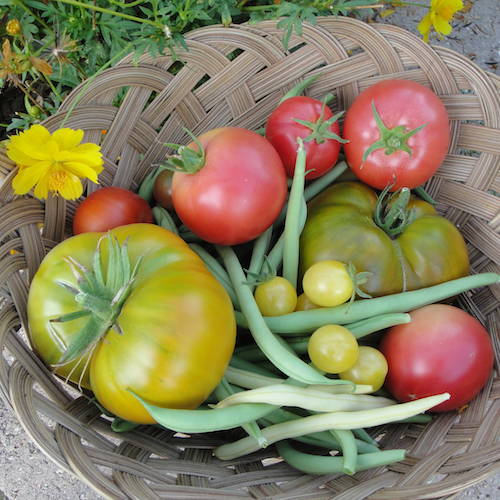
The Russian Malakhitovaya Shkatulka green tomato pictured above, was the star of our garden this summer, for both flavor and beauty.

Growing cherry tomatoes are a must every summer. Cherry tomatoes usually ripen early and are abundantly productive. If my larger-sized tomatoes fail, I can count on having beautiful cherries and not miss out on summer tomatoes entirely.


I've discovered really gorgeous cherry tomatoes shown in these photos: Black Cherry and Lemon Drop; I think you can tell which is which!


Gardening is full of interesting and fun surprises: this is the second summer in a row that a bright yellow, jelly-bean shaped tomato  (below) has seeded itself in my garden. This time it grew among a patch of irises in a dry area.


 I've never grown this variety and we've never bought any tomatoes like this one. Perhaps it grew out from a crossed tomato? This time I'm saving the seeds, as it has good flavor and production.


 Another one of my favorite summer surprises this year is the delicately colored nasturtium that volunteered to grow in a vegetable bed, apparently enjoying the company of Romano beans and French marigolds. 

Nasturtiums easily self seed and I've planted a few different types in the garden over the years, but I don't recall this one. The flowers start off pale yellow with red blotches then develop a rosy blush as they age.


 I'll save the seeds but I don't know if they will grew true next year- it's part of my experimental approach to gardening!

Lemon Queen sunflowers are showy and brighten up the garden. I grew them in my front and back yards this summer.  Bees love this particular sunflower and birds enjoy the plentiful seeds from the smallish flower heads after they have dried.


 Did you know that some sunflowers are bred to not produce pollen? It's so they won't drop "messy"pollen when they are used as cut flowers indoors. So if you hope to share them with bees in your garden, make sure they aren't the hybridized no-pollen type. 

I learned the hard way!


Runner beans are growing in several spots throughout my garden. They are ornamental as well as a nutritious edible. Runner beans are hardy, have pretty flowers in a range of colors and can climb up a trellis 10 to 12 feet high. The flowers and pods are edible, and you can save the dried beans to cook during the winter.

Plus they will happily grow back in the spring from rhizomes left in the ground after they have died back with the first frosts of winter.

The Spirit of Gardening 
I hope you too have enjoyed the bountiful gifts of summer, and if you aren't able to have your own garden, this post is dedicated to you!

Photos: Patricia Larenas, Urban Artichoke

Friday, June 15, 2012

Fresh Pea Soup: Hot or Cold


Soup? Don’t despair if you are sitting in June heat- this delicate soup is tasty served cold too. You can still find fresh peas to shell for this lovely simple soup at your farmer’s market if you don’t have any in your garden.

Shelling Time is Quality Time
This is a very easy recipe with just a few ingredients, and the most challenging part is getting all of those peas shelled. You may want to recruit some help. It would be a perfect opportunity to shell peas with a friend and catch up during the process. You might even be able to get some kids to help and show them where peas come from (besides a bag in the freezer!).


Dwarf Gray Sugar Peas
When I finally harvested the last of my heirloom DwarfGray Sugar peas I had about two pounds of podded peas. I couldn't wait to make a fresh pea soup now that I had enough peas. We have enjoyed the mildly sweet fresh peas all spring, either shelled and raw in salads, or lightly cooked with pasta, or mixed with vegetables.

I let the peas get big in the pod, so I could shell them, but this variety is also eaten as a very young tender pod. I recommend sugar peas versus English peas, which are very starchy. I don’t know how this recipe would turn out with that variety.


You Will Need
2lbs Fresh peas (about 3 cups shelled; you can shell ahead of time and refrigerate for a day or two)
1 Medium yellow onion, diced, or 2 spring onions, tender parts chopped
2 Sprigs of thyme (optional)
Salt to taste
Olive oil
Makes four main course servings

Four Steps to Soup
1. Heat 2 -3 tablespoons of olive oil in a heavy pot and gently sauté the onion with the thyme sprigs.
2. When the onions are soft  (don’t brown them) remove the thyme and carefully add 5 cups of water and ½ teaspoon of salt.
3. Bring this to a boil and add the shelled peas. Simmer for a few minutes until they are just tender.
4. Remove the pot from the burner and use a stick blender to puree the soup until it is silky smooth. Careful with splashing, as per usual.

Serve immediately or chill and serve cold.  A garnish of edible flowers with a drizzle of extra virgin olive oil is a pretty and elegant touch. I used nasturtiums which add brilliant color and just a hint of peppery spice.

This recipe was adapted from Alice Water's method in The Art of Simple Food, a book I highly recommend.

This post was also published on Eat Drink Better

Photos: Patricia Larenas, Urban Artichoke

Monday, April 23, 2012

Edible Garden Photo Essay


In this photo essay I want to share some special images from my ediblegarden. I spent Earth Day working in my garden and as always I was inspired by the beauty of our edible plants.

I can't think of a better way to honor our planet than to take time to appreciate and cherish its natural beauty, and that may be as nearby as our own backyards. It's worthwhile slowing down to savor the the unexpected treasures we find there waiting for us, every day.


Mourning doves built a nest in our leafy grape arbor and stayed all summer. It’s a bonus that our organic garden is safe haven that attracts wildlife.


Winter squashes always amaze with their gorgeous textures, colors, and enormous diversity. This summer I'm excited about growing GuatemalanBlue Banana and Stella Blue Hokkaido. Check heirloom seed sellers for unusual varieties to grow.


This Lemon Cucumber and Cranberry Bean both trellised up our tall Jerusalem Artichokes last summer. The trio seemed very happy growing together!


Violet artichokes (Violetto shown above) are truly dramatic and stunning, especially the first time you see them on the huge bushy plant.


Scarlet Runner Bean flowers are showy and beautiful climbing up on a trellis and can be grown in a container, as in the photo above. I love climbing beans and grow them on pole teepees or trellises every year.

May you have a happy Earth Day every day!

This post was also published on Eat Drink Better.

Photos: Patricia Larenas, Urban Artichoke

Tuesday, April 10, 2012

Using a Cold Frame to Start Your Summer garden

-->
You can build your own or buy a cold frame that is a mini-greenhouse

Using a cold frame is a fantastic low-tech way to start your seeds for a summer vegetable garden ahead of the summer/spring growing season.

I mentioned using a cold frame in my previous posts, How to Grow From Seeds and Growing and Transplanting Seedlings.  A cold frame can be used in different ways and will give you more flexibility in starting your plants for a summer vegetable garden. Even if you have a long growing season, you'll have your yummy veggies on the table earlier in the summer than if you wait to sow your seeds directly in the soil.

What is a Cold Frame?
Cold frames are a great low-tech way to create a protected mini-environment for cold sensitive plants. They can be made with wooden sides, with a glass lid using old windows, or with fiberglass or plastic (polycarbonate or acrylic) sheets to let in sunlight. Some are made entirely of plastic or glass, like a small greenhouse. The top is movable for venting, because cold frames will heat up quickly (think of how fast your car heats up with all the windows rolled up). You will need to prop the top open varying degrees, and it’s also helpful to be able to remove it. They can be set on bare ground over a planting bed, or on paved areas. They are generally small for home use, about 4 to 6 feet long, 2 to 3 feet wide, and 1-2 feet high.

My cold frame is a Juwel BioStar 1500 with polycarbonate panels, and beagle proof!

-->
Managing the Cold Frame Environment
Place your cold frame in an area that gets the most hours of direct sunlight. On sunny days you’ll have to be very careful to prop the cold frame’s top open so that your plants (especially tender young seedlings) don’t dry out or get damaged by too much heat. You can start to acclimate your seedlings to ambient temperatures by propping the lid open just an inch or two at first on cold days, then wider as it gets warmer.

I leave it closed up at night, and prop the top open (or remove it) when the sun starts to hit the structure, depending on the air temperature. If it’s below 60° F and cloudy I leave the top on, but propped open. At 60° F and above I’ll remove the top until the sun sets, then put it back on for the night. For daytime temperatures on in the 40's and lower you may just leave it closed. High humidity could cause problems fungal diseases, but if temperatures are cool, it’s less likely.

Check your young plants for moisture at least every day, and more often if the cold frame is warm. If you are germinating seeds, remember that they have to remain evenly moist at all times.

Save $$ by Growing Your Own
If you like growing vegetables from seed I think you'll discover as I did, that a cold frame is a fantastic way to have nursery-quality seedlings ready for your summer vegetable garden when planting time rolls around.

 This post was also published on Eat Drink Better.

Photos: Patricia Larenas, Urban Artichoke

Thursday, March 29, 2012

Saving Heirloom Seeds Through Crowd Sourcing


Want to Save an Heirloom? Grow it!
I’m getting ready to sow my Three Heart Lettuce seeds and be part of a volunteer team that is evaluating a special heirloom variety of lettuce that is in danger of extinction.  Just like rare wild plants and animals, food crops can disappear forever. It happens when people are no longer growing them, and it’s happening more often now that we rely on industrial agriculture for the produce we eat.  The project is the Member-GrowerEvaluation Network (M-GEN), run by Seed Savers Exchange (SSE). The program was initiated last year to involve Seed Savers Exchange members in evaluating the numerous heritage varieties of edible plants maintained at their headquarters, Heritage Farm, in Decorah Iowa.

Seeds that are donated to the organization often don’t come with growing instructions or information about where the seeds grow best for good performance. SSE’s extensive network of member are located in growing regions all across North America, so it makes sense to harness this valuable resource. In this way, they are gathering data on the regional suitability of many varieties in their collection that lack this information.  These details will make the seeds usable to gardeners and farmers, therefore it's more likely they will be maintained in cultivation.

Heirloom lettuce seedlings: Cracoviensis and Merveille de Quatre Saisons
Preserving Crop Diversity is Up to All of Us
Why is this important? People are beginning to realize that diversity in food crops means food security, especially in a time of climate change and shrinking crop diversity in agriculture.  The less varieties of any one type of food plant we have, whether it be corn or lettuce, the less flexibility and options we’ll have when one of them  falls victim to diseases, pests, or  a changing climate. Saving seeds and cultivating as many heritage food plants as possible provides a measure of agrobiodiversity to tap into when needed.

Crowd Sourcing Uses the Expertise of Both Experts and Amateurs
This crowd sourcing strategy has been used successfully by the Audubon Society in their annual Christmas Bird Count, which leverages the expertise and energy of thousands of volunteers every year. These expert and amateur bird enthusiasts have been gathering valuable data on bird populations, for over 100 years. It would be difficult indeed for a non-profit organization to fund such an enormous effort.

The information collected in the M-GEN project will benefit all SSE members and the public in general, by providing data on the performance of particular varieties for particular regions (anyone can order seeds from SSE). This is very helpful for gardeners choosing which vegetables to plant, and gives them an idea of what to expect in terms of performance for their region.

Order Your Seeds Today!
Seed Savers Exchange was founded in 1975, and is made up of home gardeners and farmers that grow, harvest and exchange seeds for thousands of varieties of edible plants, including herbs and flowers. An updated yearbook is published at the beginning every year with information about seeds that are available directly from members for a small fee. In addition, SSE maintains a catalog of seeds and you can order directly from them.

You don't have to be a member to order seeds from SSE's  catalog, but you do have to be a member to order from the yearbook.

Photos: Urban Artichoke

This post was also published on Eat Drink Better


Wednesday, February 1, 2012

Plan a Gorgeous Heirloom Garden


Imagine what your personal garden might be like if you were the co-founder of Seed Savers Exchange. I had the opportunity to find out recently at a talk given by Diane Ott Whealy at Common Ground Organic Garden Supply and Education Center in Palo Alto, CA. After spending the bulk of her life working hard to build the non-profit Seed Savers Exchange, she now enjoys being a gardener again without the responsibilities of feeding a family and growing an organization.

She maintains a display garden at the Seed Savers headquarters, Heritage Farm, the Whealy’s former home in Decorah Iowa. Her approach is informal and loaded with enthusiasm.

Here are her top tips for creating a beautiful, naturally lush garden with heirlooms:
  • Grow vegetables, flowers, and herbs together (interplanting)
  • Let annuals reseed themselves for the next season, including vegetables (at least in part of the garden)
  • Learn to appreciate each stage of plant growth (lettuce gone to seed is strikingly attractive)
  • Plant bulbs (tulips, daffodils, etc.) for spring flowers, then interplant with lettuce for a dramatic effect
  • Let a flowering vine intertwine with a less showy plant, for example scarlet runner beans with sweet potatoes


The effect is a lush riot of texture and color with foliage and flowers to attract pollinators, and a feast for the senses. This technique of interplanting and companion planting creates a garden ecosystem that birds and insects love- the birds help control the insect population which will be a mix of beneficial insects as well as pests. Her display garden has about 500 species that include heirloom vegetables, old fashioned flowers and herbs. Some of her favorites are: Grandpa Ott's Morning Glory, Bees Friend (a flower from Germany), Scarlet Runner Bean, Moon and Stars Watermelon, and Five Color Silverbeet Swiss Chard, among many more.

Ott Whealy explained that the mission of the organization is to inspire people to grow the seeds: Seed Savers Exchange can save seeds but they cannot maintain gardens everywhere, therefore home gardeners are the key to keeping the thousands of useful plant varieties alive as they propagate them and share them with each other.

As she noted:
"the definition of an amateur is one who loves and cares"
You can order seeds directly from Seed Savers Exchange without a membership, or you can join and become part of the network of gardeners who exchange seeds and support the organization and their programs.

This post was also published here: Eat, Drink Better

Photos: Urban Artichoke

Monday, October 24, 2011

Be Your Own Seed Bank: How to Save Seeds

My saved seeds from the lovely Hidatsa Shield Figure bean
As we celebrate World Food Day on October 24th, I’m especially thankful for one of life’s most precious gifts: seeds. Seeds are magical and mysterious in that our future rests in them. Without the thousands of varieties of useful plants we cultivate for their products, human civilization would simply cease. We could no longer feed ourselves nor our animals.

Preventing the extinction of a wide variety of food plants is not just romantic and historically interesting, it’s a matter of ensuring a healthy future for humanity. As industrial agriculture becomes increasingly focused on growing fewer and fewer varieties of food plants, home gardeners play an unexpected important role in propagating and saving old varieties of vegetables, fruit, and herbs by continuing to grow them, sharing the seeds and providing the seeds to organizations such as Seed Savers Exchange. Native Seeds Search is another important seed stewarding organization- they specialize in crops of arid regions (South Western USA), and prioritize providing heritage seeds to Native Americans.

Label your saved seeds carefully; you'll be thankful when its planting time!
Seed Saving Basics
If you have never had the pleasure of saving seeds and planting them the next season you are missing one of life’s simple and deeply gratifying pleasures. Fall signals the prime time for saving seeds and it is not difficult for many popular garden plants; all you need to know are a few basics. Try starting with easy seeds such as beans, nasturtiums, and basil, for example.

First, remember that the plant you intend to save seeds from must be an open pollinated type and not a hybrid. If it is an heirloom type it is open pollinated.

Follow these key steps:

1) Make sure you let the seeds stay on the plant until they reach full maturity. For example: if you pick bean pods while they are still green you may as well eat them, because the seeds won’t germinate!

2) Let mature seed pods or flower heads dry on the plant as much as possible. The timing is tricky in some cases because you need to collect the pod or flower head before it begins to release its seeds. In general, wild plants disperse seeds very efficiently with clever spring-loaded pods (poppies) or flower heads that fall apart readily to be transported by animals or blown away (dandelions). Domesticated agricultural plants were bred and selected for seed collection and for food harvesting, so the pods stay intact.

3) After collection and harvesting the seed pods or flower heads must dried completely. This is very important to prevent mold and spoilage. I like to keep my harvested collection in an open container in the house for a couple of weeks to make sure they dry out before extracting the actual seeds. Choose a cool dry spot out of direct sunlight.

4) Next, remove the seeds being careful not to damage them, and discard any debris. At this point I leave them to dry some more (a week or two) then store in a labeled airtight container. If I have a small number of seeds of different types I put them into labeled envelopes then put these into a jar with a lid.

Calendula flower seeds from a dried seed head.
It's a good practice to get in the habit of labeling your seeds with basic information that will be very helpful later such as: the exact name of the variety, where you got the parent plant or original seeds, and the year of collection. You'll be amazed at how fast your collection will grow, and you'll enjoy sharing them.

There are good reasons for saving the seeds of your favorite food plants besides just the fun of it: perhaps you have a special heirloom variety that is in limited supply, or one given to you by a neighbor. Saving the seeds allows you to expand the number of plants for next year’s planting season, or to share them with others for years to come.

You might even create a new variety or cultivar from natural crossbreeding in your garden!

But most importantly, you will be a a part of a growing movement to save our agricultural biodiversity, all from your own home garden.

Friday, August 12, 2011

Heirloom Bean Project: August Update


Clockwise from left: Hidatsa Shield Figure, Good Mother Stallard, Hutterite Soup, Tiger's Eye
 It's early August and the heirloom beans I planted in May and June have been flowering and forming pods. A few of the pods are starting to mature and dry so that I can have a peek at the bean seeds. Some of the beans are really beautiful colors, and it's been exciting to see how the seeds transform from tender green beans that look very much the same, into spectacularly colorful seeds.  But more on seeds next month when it's harvest time.

Sheet, or "sandwich composting" was a great way to prepare the soil for my bean trial
 The side of our house was a perfect place to plant several types as a test to see how they do in our region (see sandwich composting post, "Soil Magic..."). I plan to choose a few to do a larger planting next summer, perhaps with the more rare bean types (such as Tiger's Eye and the Hidatsa Shield Figure).

Italian Butter Beans have abundant white flowers
The Italian Butter Bean is a runner bean, as I discovered, and has large, showy white flowers. They were beautiful on a trellis in my front yard garden, and attracted a lot of admiration on our Edible Landscaping Tour. As you can see, the carpenter bees love them too!

Italian Butter Beans pods are large and fibrous
I bought the dry Italian Butter Beans at our farmer's market from Iacopi Farms. They produce typical runner bean pods: large and fibrous.  I can't wait to see the dry seeds- they should be a soft white, similar to the Cannelini Runner that I bought from Rancho Gordo.

Good Mother Stallard grew well and have plentiful pods that will be beginning to dry soon. I hope to have enough to save seeds and have some for cooking! The dry beans are very pretty: maroon with white swirls (see photo at top).