Sunday, February 7, 2021

Porotos Granados - A Seed Story and Recipe


This is a Seed Story with a recipe for Chilean Shell Bean Soup (to skip to the recipe please scroll down).

Seed Stories

The importance of a seed's ancestry and its journey parallels that of humanity, and increasingly we'd like to recapture the meaning and significance of our ancestral and heritage foods. I believe this is because seeds are the carriers of our cultures- they offer the comfort and spiritual nourishment we are often lacking. The beloved vegetables, grains and fruit of our people, whether we are immigrants, or from a certain region in the US, or Native American, these are precious parts of our cultural and ethnic wellbeing. 

The stories of our seeds are important in honoring our origins and worthy of safekeeping. 

The shell beans are green and tender


Porotos Granados - My Seed Story
Porotos granados is a very popular dish in my home country of Chile. Poroto is the word for bean, and granado means shelled. It's also the name for the bean used to make this stew-like summer food.

Although I was born in Chile, my family immigrated to California when my brother and I were very young. While we were growing up we recall hearing our parents talk lovingly and longingly (a lot!) about a Chilean dish called porotos granados,  It was only as an adult that I realized they were referring to a type of dish made with shell beans, which is the literal translation of ‘porotos granados’. This thick soup is a popular summer dish made with fresh corn, shell beans and winter squash, flavored with sweet basil and paprika. They are also used as a dry bean. 

The porotos granados seeds were sent to me by a generous gardener I met at the 2014 Annual Seed Savers Exchange Conference and Harvest, at Heritage Farm in Decorah Iowa. We sat down to lunch together at the conference to chat about gardening. As we chatted she told me she was going to Chile in a few months to work at a lodge with a chef (Mapuyampay Lodge Gastronomico, near Curicó). She wanted to experience working in the organic garden there, and to cook with the chef, Ruth Van Waerebeek, author of the book I have at home on Chilean food (The Chilean Kitchen). I was impressed by this serendipity! So I told her I would absolutely love to have seeds from the traditional foods, especially corn, beans and squash. In 2017 I received a stash of seeds from her collected from the garden at Mapuyampay. I am extremely grateful that she took the time and care to send them to me. 

The striking red color of the pods

The beans look very similar to the cranberry bean seen in our farmer’s markets in California (sold as shelling beans). They also resemble the Tongue of Fire bean, said to be from Tierra Del Fuego, and could very well be the ancestor of the Italian cranberry bean as it migrated to Europe with the colonists. I did find a reference in a catalog for the traditional seeds of Chile, that the poroto granado is "reputed to be from Araucania" which is central & southern Chile, and unceded Mapuche lands (People of the Earth, or Land).

The dried beans are also used in cooking


Porotos Granados with paprika oil

Porotos Granados Recipe
The following recipes were modified from the book by Ruth Van Waerebeek, The Chilean Kitchen. Used copies can be found on the internet.

Ingredients  
Olive oil, or other vegetable oil 
1 medium yellow onion diced 
1 clove of minced garlic 
Salt, paprika, pepper to taste 
2 ½ to 3 lb of porotos granados (or cranberry beans) in pods (at the shelling bean stage) 
2 fresh sweet corn cobs (about 2 cups of cut kernels) 
1/2 lb of winter, orange fleshed squash (called zapallo comote in Chile) 
8 sweet basil leaves or to taste

Method
Prepare the vegetables: shell the beans from their pods, cut the corn from the cobs, wash and chop the squash into medium-sized cubes. 
In a large pot, add enough water to cover the beans and chopped squash, add a little salt and about 4 basil leaves. Cook over medium heat for about 20-30 minutes. 
Sauté the garlic and onion in the oil (don’t burn) until translucent and soft; add 3-4 chopped basil leaves and the spices, stir and sauté for a few more minutes. Add to the beans when done cooking. 
Puree ½ to ¾ of the cut corn in a blender. Add the cut corn and corn from the blender to the pot of beans (when beans are done), stir well, and cook for about 5-10 more minutes. The soup should be thick, and not too soupy- but add water if needed during cooking to thin it. 

Serve with chopped basil on top, and if desired, drizzle “color chileana” on the soup (see recipe below). 

Color Chileana or Paprika Oil (Color is pronounced as in Spanish, có lor, slight accent at the front end) 
¼ cup oil or lard 
1 clove garlic, crushed 
½ tablespoon of sweet (or smoked paprika is nice too) 

Heat the lard or oil in a small pan, add the crushed garlic and sauté gently for about one minute (don’t burn). Discard the garlic, remove pan from heat and stir in the paprika. 

 *Chilean food is fairly bland- so we sauteéd some ají verde with the onions for some mild heat, or you can add some smoked chipotle powder!*

Enjoy!

                                                                                        Photos: Patricia Larenas, Urban Artichoke

Monday, January 4, 2021


Coop Gardens : A Plot to Save the World


As we launch into 2021, I look forward to continuing my work as a volunteer with Coop Gardens (Cooperative Gardens Commission), which I joined in April of last year. The organization was formed in response to the COVID-19 pandemic, with the goal of distributing free garden seeds to those most in need.

Who knew what this sudden and overwhelming global emergency would bring in the next months? 

You can learn more about Coop Gardens and download their brand new report here

Some of the ways I tried to support local organizations are below:

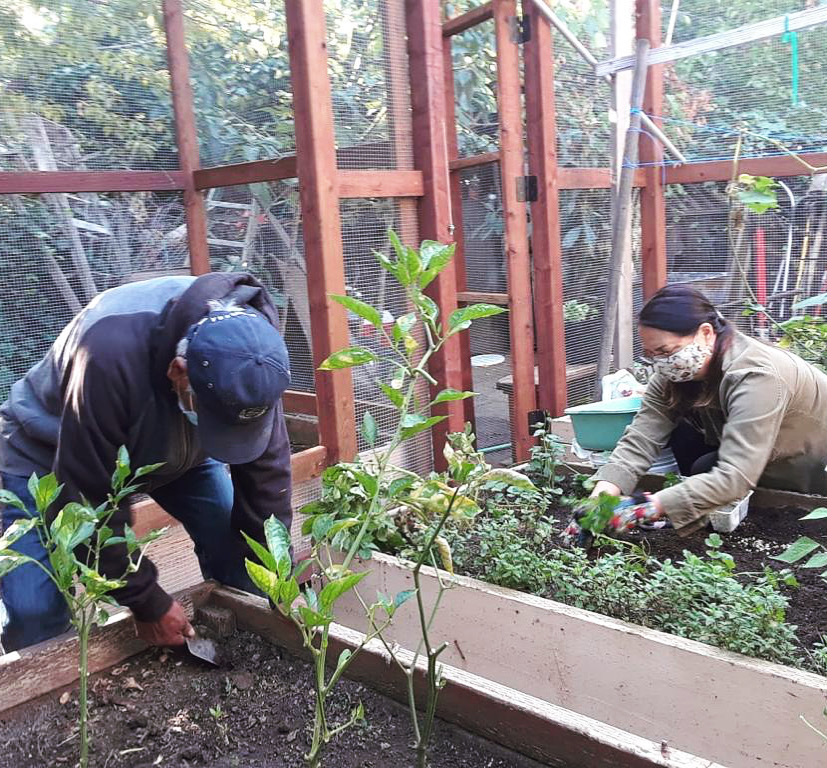
Me and Berto planting seedlings I grew, at the Day Workers Center in Mountain View, CA

Not everyone has the luxury of land in which to grow their own food garden, so I propagated seedlings to plant at the Day Workers Center. They provide such valuable services for day laborers, including meals twice daily. 


Seeds packaged and ready to deliver to La Mesa Verde, San Jose, CA

La Mesa Verde runs a wonderful and inspiring program that installs  raised beds for vegetable gardens in the homes of people in need, and provide training for new gardeners- find them on YouTube and see their videos in Spanish and English here.


                                                                        Photos: Patricia Larenas, Urban Artichoke


Monday, August 31, 2020

Saving Seeds from Your Garden

Learn how to save seeds from your vegetable garden in this series
for beginning seed savers.


I'll be giving two presentations on the art and science of saving seeds via Zoom, through the Mountain View Public Library . 

 See the descriptions below:

You must register separately for each, part I and part II. See the links below:

Seed Saving Basics, Part I: Thursday, September 17, 5pm- 6:30pm

Description: This talk is an introduction to the art and science of saving your own seeds. Learn the basic techniques for saving seeds from popular annual vegetable garden plants. Covered in part I: why we save seeds, the basic botany of flowers and pollination, saving pure seed and when to worry about species crossing.Vegetables discussed: lettuce, tomatoes, beans (includes peas), and peppers. Storing seeds will also be discussed.

Register for Part I: September 17, Part I


Seed Saving Basics Part II : Thursday, September 24, 5pm- 6:30pm


Description: this talk is a continuation of Part I, and will cover saving seeds from cucumbers and squashes, and biennial crops, such as brassicas (kale, broccoli etc) and carrots. If time allows popular herbs such as sweet basil and cilantro will be discussed. Plus simple ways to test the viability of your stored seeds (germination testing).

Resources for learning more about saving seeds and plant propagation will be provided.


Register for Part II: September 24, Part II


Lettuce seeds ready for harvesting
Lettuce seeds 

Photo credits: Patricia Larenas

Monday, May 25, 2020

Saving Seeds is an Essential Activity


In this time of the pandemic and sheltering-in-place, I'm abundantly grateful that I have a seed saving habit. As the pandemic began to make inroads in Silicon Valley, I had the sudden urgent desire to plant as many edibles as I could, and to reclaim some of the nooks and cranies of our yard that host ornamental plants instead of edible ones. 

I wasn't alone.

The rush to order seeds seemed to be a global reflex that caused seed companies to be quickly overwhelmed with orders: so much that it caused several of the large seed suppliers to temporarily close their online stores in order to keep up with the demand. If you are a gardener you know that the season marches forward and some crops need to be started in a certain window of time.

Therefore, I rushed to my seed collection and got growing without delay. I had most of the varieties I wanted to grow, and I was able to share extra seeds with others.

I'm even more committed now to saving seeds- it's essential, and even when we appear to be in times of stability, changes can occur at a frightening speed.

Save seeds. Sow them. Grow them. Repeat.

Small amounts of seed in coin envelopes for sharing


Pole beans can easily be grown in a sunny small space, even in the front yard!
Photos: Patricia Larenas

Tuesday, March 17, 2020

A Victory Garden for Today - Growing Edibles Under Lockdown


We' re all in this together: the global pandemic that is COVID19 has arrived. But there's something we can do to help ourselves, our families, and our neighbors:
Grow edibles- it's a perfect time to kick start your growing project, if you haven't already. Containers work great if you don't have space or access to a garden. And make sure you plant enough to share with those who can't have a garden, if possible. 


Young children naturally love digging and planting seeds

Healthy for Body and Mind
I'm starting my veggie garden with renewed enthusiasm not only as a bit of extra insurance in case our food supply chains are interrupted, but for my mental and emotional health as well. Kids will especially need activities to engage them during this time. Even very young ones can keep entertained by filling containers to start seeds, planting seedlings, and helping to harvest the bounty. Watering is another task very much prized by kids, in fact it's my grandson's favorite!

When my grandson was only two and a half years old, he was very good at shelling dried peas from the dried vines- and to my amazement he worked at this quietly for quite some time. I like to think I'm grooming him to be a good steward to the planet, and fostering his connection to the living world around him.

By gardening you can feel good about doing something positive for the planet- the more plants we cultivate the better, although there's a right and a wrong way. Organic, regenerative gardens without pesticides and herbicides benefit everyone (and every being). My garden has native plants as well as edibles. I'm aiming for a healthy ecosystem as much as possible, because this means I don't need to use harmful chemicals. To this end I include habitat for wildlife as a priority. Think tall hedges for nesting birds and flowering shrubs for pollinators. See my post "Creating a Health Garden Ecosystem".

Shelling peas at two and half years old

Resources for Getting Started
You Tube has lots of content about growing vegetable gardens, and for lots of short helpful videos check out Peaceful Valley's Grow Organic website. They're a great source for supplies for organic gardening (based in California).

On this blog, have a look at my Gardening Index and Recipe Index, also check out the links I've listed on the right sidebar. 

And if you have a particular question you need help with, let me know in the comments.

Let's get our hands in some soil and get back to our roots!
Here's hoping you are healthy and happy in these challenging times.

                                                                      Photo credits: Patricia Larenas, Urban Artichoke


Friday, September 21, 2018

Climate Appropriate Gardening and Design


Instead of "drought tolerant" I've adopted "climate appropriate" into my gardening vocabulary. Designing gardens that meet our needs in urban California involves a lot more than just saving on water use. When I'm designing a garden I always aim to create a visually richer, as well as more earth-friendly environment than what I started with. 

The word appropriate aligns especially well to our changing climate and growing conditions: this is the challenge we all face today and for the foreseeable future. And to me it implies that my climate appropriate approach to designing a garden, will adapt to meet the current needs. It's a good reminder to be flexible in my thinking, and to keep informed.

Replacing a lawn is an opportunity to add beauty and diversity
Among many inspirations, landscape architect Thomas Rainer stands out. He champions the cause for bringing more "wildness" into our urban spaces, urgently needed due to the rapid loss of wild spaces. See Rainer in this short video interview here (courtesy of the Pacific Horticulture Society).  

We have the perfect opportunity to add ecological value whenever we are replacing lawns or simply replacing and/or adding plants to our gardens. For example, plant flowering shrubs for your eyes and to feed pollinators- the gorgeous sage (salvia) below is 'Friendship Sage', also known by its original name 'Saliva Amistad'.

Sages (salvias) have lovely flowers in many colors
Hummingbirds love sages, as do bumblebees. This group of plants are generally happy with low to moderate water, even in warm climate zones such as our San Francisco Bay Area. 

In the photo below we designed a long berm with a mix of sages and other flowering plants to create a pollinator garden that would be pleasant to look at from the outdoor patio and from inside the house.  We included an herb garden for fragrance and its value in providing herbs for cooking year-round. 

This low-water garden replaced an unused pool
When replacing pools, lawns, or areas that were previously paved over, I love creating a space that enhances quality of life by being a place to relax and connect with nature. And it's a welcome bonus that adding more plants around homes results in not only beautiful, calming, environments but they mitigate the amount of heat produced by our over-paved urban spaces. Plants transpire water vapor into the local environment, especially trees. So not only do trees provide shade, they actively contribute to cooling. 

In California where the loss of trees due to drought and fires is staggering, we can do our part by planting trees with low and moderate water needs around our homes, as many as possible. 

A quiet seating area with flowering sages replaced bare soil
Below, wildflowers in a front yard meadow garden provide a spectacular seasonal display.


I'm also a big fan of growing seasonal edibles at home, and when we save water by replacing lawns or pools with a low water garden, we can feel good about using some water on our special heirloom vegetables. Growing our own food not only connects us to the seasons but can also remind us of our heritage and culture. Heirloom vegetable seeds are readily available from many sources. It's meaningful and satisfying to learn their stories and enjoy them with our families and friends by growing them.

Many fruit trees are perfect for low to moderate water gardens: avocado, plum, pluot, apple, persimmon, pomegranate and pineapple guava. Check my gardening index for more on edible landscaping.

'Four Corners Gold' bean in my front yard last summer
For more information and resources about climate appropriate landscaping go here.

Photo credit: Patricia Larenas

Sunday, January 22, 2017

Rejuvenation Through Saving Seeds

"Institutions do not save seeds- humans with hearts do."
- Dr. Gary Paul Nabhan, 2013 Annual Conference and Campout, Seed Savers Exchange


This post was updated on July 22, 2017

This year I attended the 37th Annual EcoFarm Conference held at Asilomar in Pacific Grove, California, as a gift to myself at the start of the new year. I greatly looked forward to spending quality time with organic growers and advocates. I always learn something, connect with interesting people, and return rejuvenated and inspired with a renewed commitment to my work with edibles and seed saving. The theme of this years' conference was 'Cultivating Diversity', as in people, as well as seeds. It's a theme close to my heart, as an immigrant and a seed steward.


So I got to thinking about seeds and my ancestral origins. And as I day-dreamed about the coming spring planting season, strong emotions were stirring within. I'm passionate about seeds- they truly stir up my emotional side. It's taken me a while to understand why and to be able to begin to express it words. Seeds, especially for edibles, have been saved by humans for many thousands of years. First Nation Peoples consider them as "living, breathing, ancestors" in a literal, not figurative sense. And in fact, viable seeds ARE alive, and they are handed down through families and communities to this day, although alarmingly, much less so. These are true heirloom varieties that are a crucial means by which we carry on our culture, whether it's rooted in Native American traditions or in a family group of immigrants, perhaps generations ago.


In my family, favas are a must-have spring food that I grow annually

We all have family food stories with origins in those who came before us, if we dig deep enough. For immigrants like me, those connections to my cultural foods are strong. I arrived in the USA with my parents and brother from Chile many years ago as an infant, but I grew up around an extended family and community of Chileans. It was years into adulthood before I realized that many of our favorite Chilean dishes originated with Native Peoples in the region, especially the Mapuche ("people of the earth"). In fact many of our words in Chilean Spanish have their roots in Mapuche language (Mapudungun).

Beans and fresh corn with basil is a typical Chilean food combination

So it's not surprising that my garden reflects my cultural roots, a mix of what the European conquistadors brought with them and Native foods: different types of common beans (Phaseolus vulgaris), fava beans, salad greens, artichokes, squashes, and various perennial herbs are my staples, including two shrubs of Lemon Verbena for herbal tea (Aloysia triphylla), native to Chile and Argentina. 


Squash is another family favorite 

I recently received a precious gift of seeds from Chile: winter squash, beans, a sweet pimento pepper and a spicy pepper, plus corn seeds with which to make a favorite national dish, pastel de choclo (derived from the Mapuche word for corn). Through my research I discovered that some of the old seed varieties are stewarded by dedicated guadadores de semillas or seed savers, same as in the USA, but not accessible to me, (as far as I know). 

My harvest of beautiful runner beans (Phaseolus coccineus)

I have been conducting seed trials of heirloom seeds as a volunteer for Seed Savers Exchange for several years, and this work as been very satisfying. At the 2017 EcoFarm conference I was fortunate to meet Rowen White , a Mohawk Seed Keeper and seed advocate. I participated in her 'Seed Seva' online mentoring course that weaves Native Peoples' traditional seed practices into gardening and farming training. She's a very knowledgeable and precious mentor.

My current focus is cultivating seeds of my Chilean and Native origin crops in a responsible manner, and putting my effort into growing, eating, and respectfully maintaining these- it's a way to connect with my own ancestors. It is both tragic and traumatic that many tribes have lost the seeds specific to their People as an outcome of colonization- seeds that were essential to the continuation of their cultures. A good place to start is Native Seeds/Search in Arizona, specializing in seeds for crops suited to arid areas, as well as Indigenous in origin (quite relevant to our dry and warming climate in California).

My passion for saving seeds has been rejuvenated by these living seeds and honoring my ancestors from the southern continent.
                                        
Photos: Patricia Larenas, Urban Artichoke


Tuesday, August 23, 2016

Edible Landscaping Your Front Yard - Start Now

Striking ornamental kale can be planted among edible kale

Fall is just ahead and it’s the perfect time for bold action: adding edibles to your suburban front yard. If you have a conventionally landscaped front yard and you aren’t sure how to begin, here are some ideas to help you get started.

Getting Started
For the front yard there is still an aesthetic norm to overcome in lawn-centric suburbia, but that convention has been shifting steadily.  Growing vegetables, herbs, and fruit boldly in plain sight needn’t be the eyesore of the neighborhood if you give some thought to how they will fit into your garden design. In my opinion, both edible and ornamental plants coexist in a beautifully in a garden. It doesn’t have to be one or the other.

America spinach with violets

To start, you'll have to consider the exposure to direct sunlight, at least 4-6 hours per day, and the condition of the soil. Check with your local UC Master Gardeners for more details on planting and soil prep for your region. They will also have seasonal planting charts. Sign up for their excellent monthly newsletter that reminds you about seasonal garden tasks, including planting edibles.

Below are some simple ideas for small additions with the potential for a big impact.

Where to Add Edibles Now
Flower Beds and Borders:
If you have existing flowerbeds, that’s a great place to begin. If not, you might consider removing a strip or patch of lawn to make a combined flower and edibles bed. This would be nice as border along a walkway or fence, or even in the center of a lawn (remove and prepare a square or round shaped patch). Small shrubby herbs such as thyme (choose from lemon or lime thyme) or sage (add a trio of culinary sage with blue-gray leaves, tri-color sage edged with purple, cream and green, and yellow sage) fit well among flowers, and they hold up to the mild frosts in our San Francisco Bay Area. Rosemary is a popular, large landscaping plant that is covered with sweet blue-lavender or purplish flowers for months of the year. 


Trailing rosemary is attractive, fragrant, and great for cooking

You can easily slip in vegetable seedlings when planting out flowering annuals or among bulbs.  Spinach, lettuces, kale (including ornamental kale), and Asian greens, can be grown in fall since they prefer cooler temperatures and can be grown during winter in our region. These leafy green veggies will add attractive foliage to a bed of flowers, and if you really want to be on your game, plant edible and beneficial flowers, such as calendulas, and add nasturtiums and marigolds for summer.

The viola family, which includes violets and pansies, are good cool weather choices for fall and are high impact for their varied colors. This group is semi-perennial in mild winter climates and provides lots of blooms fall through spring, going dormant in hot summer weather (some will reseed). For annuals such as nasturtiums, which are frost tender, wait until spring. But beware: if you buy nursery seedlings make sure they were grown without pesticides and herbicides, otherwise, don't eat the flowers!

Artichokes have spectacular foliage, but need space

Go Big and Bold with Artichokes
If you have the space for them, artichokes are a spectacular addition to the garden. Their bold foliage is striking, and in spring they'll reward you with edible artichoke heads. I particularly love the violet ones, such as Violetto and Purple of Romagna. Romanesco is a tightly rounded variety that is tinged with purple. The green globe types have equally beautiful foliage. Fall through early summer is the best time for artichokes. They tend to go dormant with the heat of summer, at this point you can cut them back and keep them mulched. Mine are shaded in the later part of the afternoon for the hot sun so they begin to sprout new growth if I water them occasionally during summer. Towards fall they really start to bulk up.

All of them will eventually yield huge flowers with purple stamens if you leave the heads on the plants. I always leave a few to flower, then watch the bees enjoy them!

Artichokes will eventually explode with purple flowers if they aren't harvested

Containers:
Planting into containers is another great way to experiment with edibles since containers can be moved around, grouped in different locations or used as a welcoming feature on a porch. Numerous colors, sizes, shapes and textures are available to match or brighten up your existing landscape. Containers filled with flowers and lettuce are sure to be a conversation piece. For the coming cool months you could pair lettuce, kale, or spinach, in containers with edible flowers for a beautiful display. Mix with ornamental kale for an extra showy focal piece.

Showy heirlooms: Dwarf Gray Sugar Peas date back to 1892

Trellises:
I also love growing snap peas and snow peas over winter and early spring. They are beautiful on a trellis, and you can plant flowers and leafy greens around them. I have several different trellises in the front yard of different types and sizes for climbing edibles. Lovely bicolored Dwarf Gray Sugar Peas resemble sweet pea flowers (which are NOT edible) and would be a winning combination with cool season flowers in your front yard.

Start Small, But Start Now
Eating sweet crisp pea pods with fresh salad greens and herbs, plus edible flowers from your own front yard may inspire you to expand your edible landscape into a beautiful productive kitchen garden by the time spring rolls around. A good approach is to start gradually. You can start this fall by adding these varieties that will overwinter well, then plan to add warm season edibles in spring and summer. Enjoy learning as you grow, gather ideas about what you enjoy growing and eating, and design features you’d like to add. If you are new to growing vegetables and herbs, getting some experience first will help shape your overall landscaping goals.

Note: during our cool and rainy months in California you will have to have a plan for slug and snail control. Handpicking in the early morning or evenings is effective if you keep at it. You can supplement handpicking with a sprinkle of  a non-toxic product such as Sluggo.

A earlier version of this post was published in March 1, 2012 at Eat Drink Better

Photos: Patricia Larenas, Urban Artichoke


Friday, July 22, 2016

My Three Elements of Garden Design

A concept sketch for a client 
There is an awful lot to consider when designing a garden, besides the aesthetic design part.

I sat down a while back to organize my thoughts for a presentation at Foothill College's Environmental Horticulture and Design program, about how I approach a garden design project. There are numerous things to consider, but I was able to condense it down to three categories with basic points for each.

An edible garden I designed where the landscaper built beautiful raised beds

My categories below are all equally important, but sometimes one or another becomes the dominating constraint:
  • PRACTICAL ELEMENTS 
  • CLIENT PREFERENCES
  • AESTHETIC & DESIGN ELEMENTS

I. PRACTICAL ELEMENTS
  • The site: climate zone, exposure (sun/shade, wind), topography, current condition of soil &; existing plant material, etc.
  • Type of garden maintenance desired for upkeep
  • Use sustainable practices and climate appropriate plants
  • Budget 

II. CLIENT PREFERENCES
  • Plant likes and dislikes, style of garden desired, color preferences
  • Allergies, other concerns (example- poisonous plants)
  • Kids, pets
  • What will the garden be used for? 

Besides listening carefully to our clients, a designer's job is to come up with interesting and exciting possibilities that fit their lifestyle. I try to come up with at least one or two ideas that are "out of the box" to nudge my clients into thinking creatively about using their new garden space for maximum quality of life. 

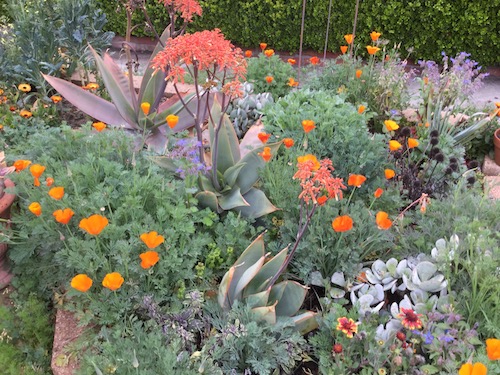
In addition to select native and ornamental plants, many succulents are "climate appropriate" for our area

III. AESTHETIC & DESIGN ELEMENTS
  • Style of house (architecture), style of existing garden (things that will stay)
  • Views (desirable & not), what can be leveraged to advantage?
  • Dominant existing features (walls, large trees, colors) elements adjacent to the property
  • Creating a beautiful planting design and suggesting enhancements (complimentary containers, water features, hardscape, etc.)

A DESIGNER'S CHALLENGE

After gathering and considering all of the elements above I ask, "how can I create a beautiful and satisfying garden for this client that is in harmony with the environment?"

As daunting as this task may seem, I find it helpful to remind myself what I was taught in my design classes: 
A “Problem” (or constraint) Is An Opportunity
For example: California's drought has created a myriad of opportunities for creatively rethinking what we plant in our gardens, and how we use them. I think this topic would be a great blog post! Stayed tuned...

Echeveria cante is a lovely succulent that adds style and beauty without a lot of fuss
Photos: Patricia Larenas, Urban Artichoke