Images From My Summer Garden
I love sharing my passion for gardening and hope you've found
bits of encouragement, inspiration, or simply enjoyed a beautiful image in my
posts now and again.
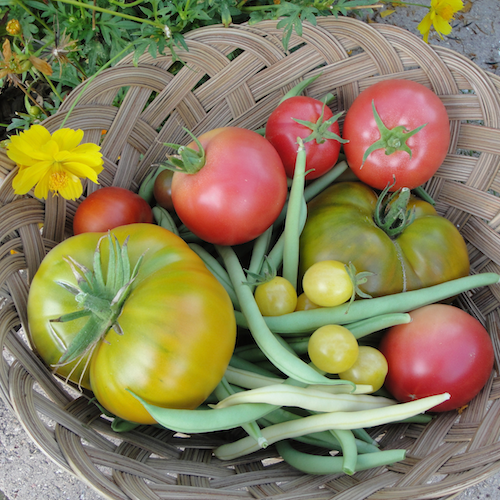
Here are some images from my edible garden this summer that I haven't published previously that I hope you enjoy:
The Russian Malakhitovaya
Shkatulka green tomato pictured above, was the star of our garden this summer, for
both flavor and beauty.
Growing cherry tomatoes are a must every summer. Cherry
tomatoes usually ripen early and are abundantly productive. If my larger-sized
tomatoes fail, I can count on having beautiful cherries and not miss out on
summer tomatoes entirely.

I've discovered really gorgeous cherry tomatoes shown in these photos: Black Cherry and Lemon Drop; I think you can tell which is which!

Gardening is full of interesting and fun surprises: this is
the second summer in a row that a bright yellow, jelly-bean shaped tomato (below) has
seeded itself in my garden. This time it grew among a patch of irises in a dry
area.

I've never grown this variety and we've never bought any
tomatoes like this one. Perhaps it grew out from a crossed tomato? This time
I'm saving the seeds, as it has good flavor and production.

Another one of my favorite summer surprises this year is the
delicately colored nasturtium that volunteered to grow in a vegetable bed, apparently enjoying the company of Romano beans and French marigolds.
Nasturtiums easily self seed and I've planted a few different types in the
garden over the years, but I don't recall this one. The flowers start off pale
yellow with red blotches then develop a rosy blush as they age.

I'll save the seeds but I don't know if they will grew true
next year- it's part of my experimental approach to gardening!
Lemon Queen sunflowers are showy and brighten up the garden.
I grew them in my front and back yards this summer. Bees love this
particular sunflower and birds enjoy the plentiful seeds from the smallish
flower heads after they have dried.

Did you know that some sunflowers are bred to not produce
pollen? It's so they won't drop "messy"pollen when they are used as
cut flowers indoors. So if you hope to share them with bees in your garden,
make sure they aren't the hybridized no-pollen type.
I learned the hard way!

Runner beans
are growing in several spots throughout my garden. They are ornamental as well
as a nutritious edible. Runner beans are hardy, have pretty flowers in a range
of colors and can climb up a trellis 10 to 12 feet high. The flowers and pods are
edible, and you can save the dried beans to cook during the winter.
Plus they will happily grow back in the spring from rhizomes
left in the ground after they have died back with the first frosts of winter.
The Spirit of Gardening
I hope you too have enjoyed the bountiful gifts of summer, and if you aren't able to have your own garden, this post is dedicated to you!
Photos: Patricia Larenas, Urban Artichoke


